
Making a Plan to Hunt the Western U.S.
By PJ DelHomme
If you’ve ever spent more than a few sits in your treestand thinking about hunting the wide-open expanses of the West, then we can help. There’s certainly nothing wrong with a good whitetail sit, but there’s a whole lot of adventure waiting for you on those millions of acres of public land. Initially, planning your hunt out West will feel less like a hunting trip and more like a second career. Securing a tag in the Rockies isn’t as simple as hitting the local hardware store before the opener. Getting the tag is just the beginning. Here’s a strategy to get started.
Applications
The hunt starts when there is still plenty of snow on the ground; not in the fall. Application windows typically crack open in February and remain open through May in most Western states. Depending on the state, a tag can be your most expensive cost. Be sure to familiarize yourself with the “draw” systems. You’ll also need to learn the language of points.
- Preference Points: These add up over time, allowing you to reasonably predict when you might draw. It could be a couple of years; it could be 30 years. States like Colorado and Wyoming reward those who have been waiting the longest.
- Bonus Points: This is a weighted lottery. In Montana or Arizona, every year you strike out, you get another “ticket” in the bucket. You might get lucky in year one, but don’t bet on it.
The real devil is “point creep”—where the number of applicants outpaces the tags, pushing the “entry fee” higher every year. The smart move? Be like Randy Newberg and play the short, medium, and long game. Apply for that “dream” unit in Arizona, but buy an over-the-counter (OTC) tag in Colorado. Don’t spend your life collecting paper; get out and hunt something while you wait for the lottery gods to smile. To help you sift through the mind-numbing morass of navigating tag draw systems, listen to podcasts like Randy Newberg’s Hunt Talk Radio and Built to Hunt, produced by Huntin’ Fool.
For an insanely detailed chart that outlines 2026 Western hunting application dates, draw deadlines, and important tag sale dates, goHUNT.com cannot be outdone.

Pick Your Species Wisely
Everyone wants to hunt a screaming, rutty bull elk, but success rates for DIY public land elk hunts often linger in the single digits. I am living proof of that. Elk are nomadic, loud, and live in places that’ll break your spirit—like right on the other side of a No Trespassing sign. For the uninitiated, pronghorn or mule deer are better teachers. Pronghorn live in the wide open and stay active all day, offering a masterclass in spot and stalk—my personal favorite kind of hunt.
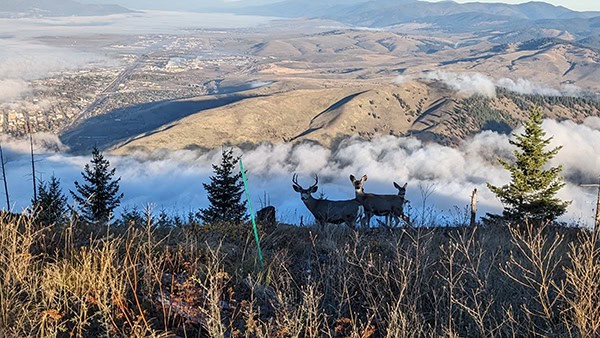
Mule deer usually require some elevation gain. This herd was 2,000 feet above the parking lot below.
If you just have to have elk, look to Montana, Colorado, and Idaho. Colorado boasts the heaviest elk density (about 300,000), while Montana offers a staggering 120 million acres of public land. Wyoming is the gold standard for pronghorn, provided you’re willing to pay the nonresident premium.
Scout From the Couch
Let’s say you’re lucky enough to have drawn a tag or you have a buddy whose uncle’s cousin owns a ranch out in the middle of nowhere Wyoming. Good for you! It’s time to download some apps to your phone and start e-scouting. If you’re more of a do-it-yourselfer who likes to save money and hunt public land, then you’re going to need to research. Tools like onX Hunt or HuntStand are great places to start as you look for the big three that big game need to survive:
Water: Don’t just look for blue lines on the map. Find the hidden seeps, unlabeled springs and stock tanks.
Security: Use road-density layers to find the dark timber—those north-facing slopes far from the nearest trailhead where elk go to hide from the orange army.
Food: Look for old wildfire burns (one to 10 years old). They are absolute magnets for high-quality forage.
The goal is to have plans A through D. If you pull up to a trailhead and it’s packed with horse trailers, you’d better have another drainage ready to hike. This makes planning and scouting from space incredibly helpful.
Get Off the Couch
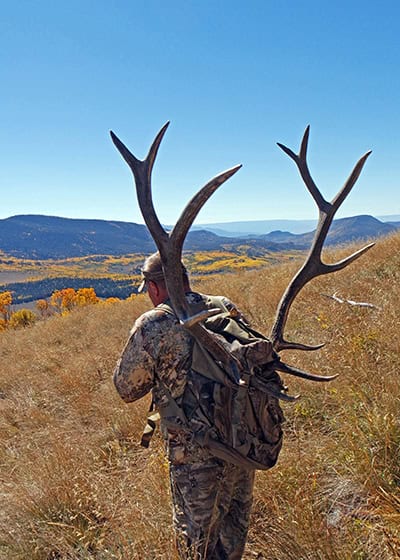
Prepare your body for heavy loads through tough terrain.
Building a mountain-ready body is less about looking good (thankfully) and more about surviving a 30-degree pitch with 60 pounds on your back. To get ready, put on your hunting boots, grab a pack, and start with 20 pounds in the pack for a three-mile hike on the hilliest terrain you can find. Every two weeks, add five pounds until you’re training with 15% more weight than you’ll actually carry in the field, which not only builds leg strength but identifies gear hot spots and toughens the skin on your feet before they ever touch a trailhead.
Because I’m a writer and not a doctor, please don’t do anything until you talk to a doctor about an exercise program. Heck, invite them to come with you.
Finally, factor in elevation. Hunting at 8,000 feet offers roughly 25% less air than at sea level. While you can’t easily simulate altitude, you can increase your heart’s efficiency through high-intensity interval training (HIIT), such as hill repeats or stair climbing, to push your anaerobic threshold. A strong core—built through planks and side planks—is the final piece of the puzzle, providing the structural integrity to hold your frame upright under load so your lower back doesn’t seize up when you’re miles from the truck.
Check Your Gear
There are a couple of pieces of gear you should consider upgrading before heading out West, but one of them isn’t a new rifle. I hate to break it to you, but you probably don’t need a new rifle to hunt big game out West. You can get away with owning just one rifle for most big game.
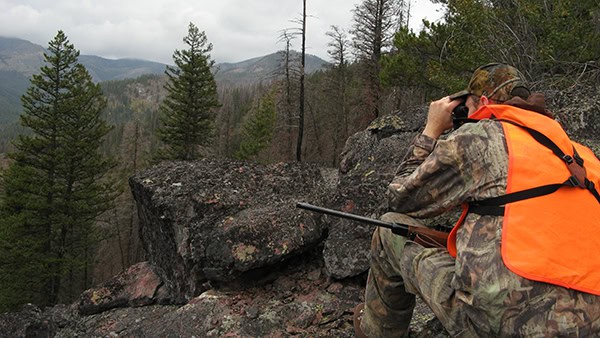
A pair of 10×42 binoculars is your bread and butter when hunting out West.
Because of the wide-open terrain, you will need quality binoculars. Expect to spend 90 percent of your time sitting on a glassing knob. A pair of 10×42 binoculars is your bread and butter. Let your eyes do the walking. Once you spot a promising animal, you can plan your approach. If you do fill a tag, don’t expect an easy drag out. I’ve seen whole elk and mule deer in the back of pickups, but I would much rather cut those critters into manageable pieces. Only then would I consider hauling them out. If that’s the case, you’ll need a burly pack to haul meat and gear out of the backcountry.
When you’re packing heavy loads, a sturdy pair of boots is a no-brainer. Shopping for boots can be overwhelming, so stick with a company that builds boots in elk country like Danner. Lucky for us, there are other quality hunting gear manufacturers in the USA, like Leupold (optics) and Stone Glacier (packs).
Once In the Field…
It’s tempting to plan a hunting trip until you think you have every curveball covered. This will not be the case. The elk will not be where you think they should be. The weather will be 90 degrees for a week straight. The trailhead will be full of horse trailers. A mop-up crew of firefighters will be working your ridgeline to put out spot fires. All of these have happened to me more than I like to admit.
One of the best things you can do in hunting the West is to be flexible. Soak it all in. Be happy you’re not at work. You might not fill a tag, and that’s just fine. You’ll learn what it takes to get started hunting where the deer and the antelope play. And every year you come back, you’ll be just a little wiser. Play the long game, and don’t just keep thinking about it. Apply now.
PJ DelHomme writes and edits content in western Montana. He runs Crazy Canyon Media and Crazy Canyon Journal.