
Bow Hunting Hogs:
An Off-Season Way to Stay Sharp
By PJ DelHomme
Wild pigs are often dismissed as ecological wrecking balls that tear up timber and soy fields. That’s not wrong, but they can be a low-stakes, high-reward training ground. By hunting hogs with your bow, you can keep those hunting instincts honed all year long.
Archery is a game of inches and anatomy. Don’t assume that because you pinwheeled a buck last fall that you don’t need practice. We all do, and hogs are an easy target. Plus, they’re an ecological menace.
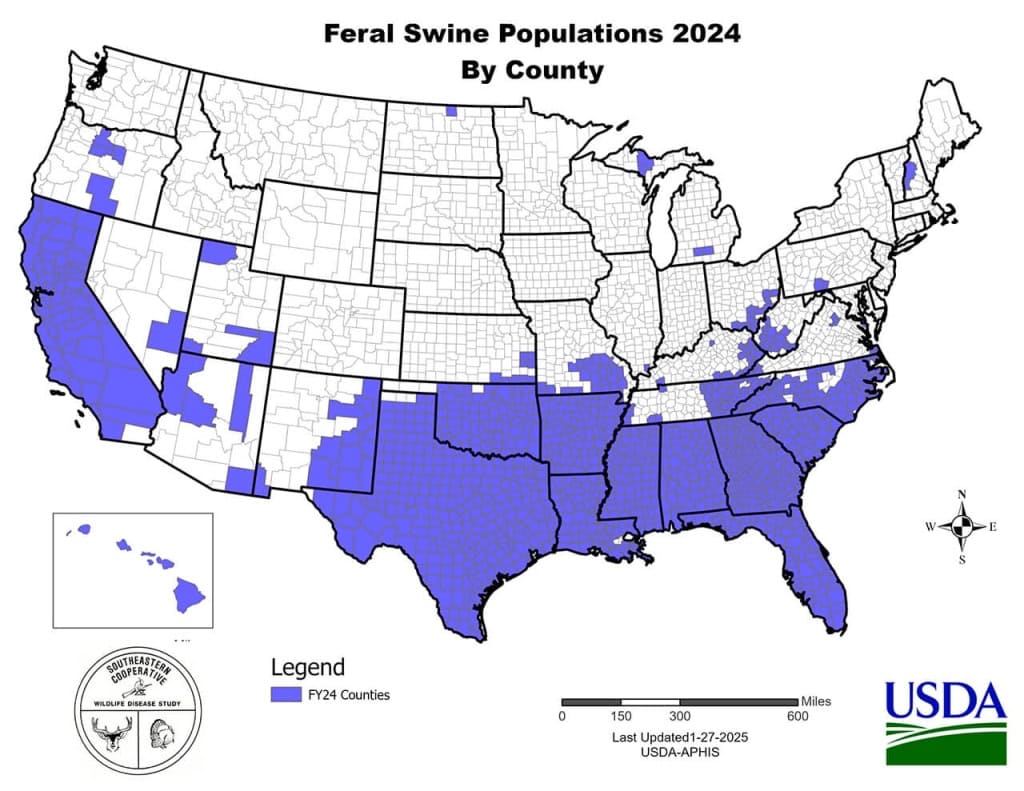
Feral hogs wreck crops, waterways, and native habitat. USDA estimates they cause billions in damage yearly, with control programs ongoing. Every hog you put in a freezer helps, turning off-season practice into management. And it keeps your mind in the hunting game because they possess a sense of smell that rivals elk and whitetail.
Hog Anatomy and Shot Placement
You likely already know this, but just in case: Hogs are not deer. A hog’s vitals sit forward and low, behind a thick shoulder shield on boars that can deflect arrows. Aim for the heart-lung area on broadside or slight quartering-away shots, ideally at 20-30 yards, where most bowhunts happen. Ethical shots apply to hogs, just as they do deer.
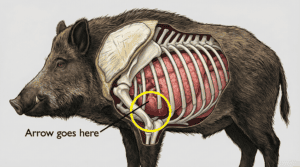
Aim for the heart-lung area on broadside or slight quartering-away shots.
You can’t just aim for the brown. You have to pick a single hair low on the brisket. This is where you stress-test your gear. If your broadhead can’t punch through a 200-pound boar, you probably shouldn’t trust it on a bull elk in the fall. It’s better to find out your arrow weight is too light for a Texas hog than on a mountain in the backcountry.
Use Deer Gear
Use the gear you trust on big-game hunts. A 60-70 lb. bow with fixed-blade broadheads and 450+ grain arrows ensures pass-through on tough hides. Cut-on-contact heads like 100-grain two-blades work best. I love the way mechanical broadheads fly, but they can open late on bone impact. Sights, pins, or a single pin at 20 yards keeps it simple. There is no need for a special hog bow—unless you like blowing cash.
Where to Hunt Hogs
Because they are an invasive species, the opportunities to chase feral swine are nearly endless, and the seasons—if you can even call them that—never truly close. Here are some regions to narrow your search. Since we first started writing about hog hunting, their populations have migrated even farther north.
- The Texas Brush Country: This is the undisputed capital of hog hunting. Places like the Rolling Plains or the South Texas Brush offer high densities and affordable over-the-counter opportunities. Many ranches offer “meat hunts” that won’t break the bank.
- The Florida Swamps: From the Everglades to the Panhandle, Florida is crawling with pigs. Public lands like the Big Cypress National Preserve offer a rugged, walk-in challenge. Be mindful that you’re also on the menu thanks to the alligators.
- The Deep South: States like Georgia, Alabama, and South Carolina have massive populations. Look toward the river drainages—pigs love water and thick cover.
- Oklahoma Dirt: The Sooner State has seen a massive explosion in pig numbers. The public land around the Red River is prime territory for a spot-and-stalk archer.
- Ham in Wine Country: Don’t overlook California. Pair your swine with a full-bodied red with high tannins and spicy notes.
 Hunting Tactics for Little (and Big) Piggies
Still-hunting thick brush builds stealth and wind awareness. Move slowly, glass, and close the distance on bedded groups. All of these skills translate to chasing elk and mule deer. Blinds over bait or feeders teach patience and trigger control. Wait for the right pig to clear cover, then execute. Spot-and-stalk archery hunting in open ranch country adds range estimation and stalk craft. Each method stresses real pressure: fidgety pigs, rustling siblings, swirling wind. That beats backyard shooting.
Hogs run hard post-shot. Wait 30 minutes, then track blood and mark the last bit of sign. Use a good light and a dog if available. If you’re heading into gator and water moccasin country for recovery, make sure your Power of Attorney is up-to-date.
Once you find Porky, field dress it quickly to cool the meat. While big old boars have awesome-looking tusks, young pigs taste best. Grind those old guys with pork seasoning. And don’t forget that feral hogs are known carriers of swine brucellosis and pseudorabies. Handle them with gloves and cook thoroughly (to an internal temperature of at least 160°F).
Big-game seasons end, but bowhunting doesn’t have to. Unlike a single elk tag, hog hunting forces close-range work and keeps your fundamentals sharp. Plus, you’re doing a public service by bringing home the bacon.
PJ DelHomme writes and edits content in western Montana. He runs Crazy Canyon Media and Crazy Canyon Journal.